
Our Money, Our Future: Award Winners 2026
In the 2025/26 academic year, 82 schools across Ireland received sponsorship to support their Our Money, Our Future financial literacy initiatives.
From these fantastic projects, we were delighted to award seven prizes.
Choosing the winners was certainly not easy, every project was of extremely high calibre and demonstrated real leadership and commitment to helping young people build money skills for life.
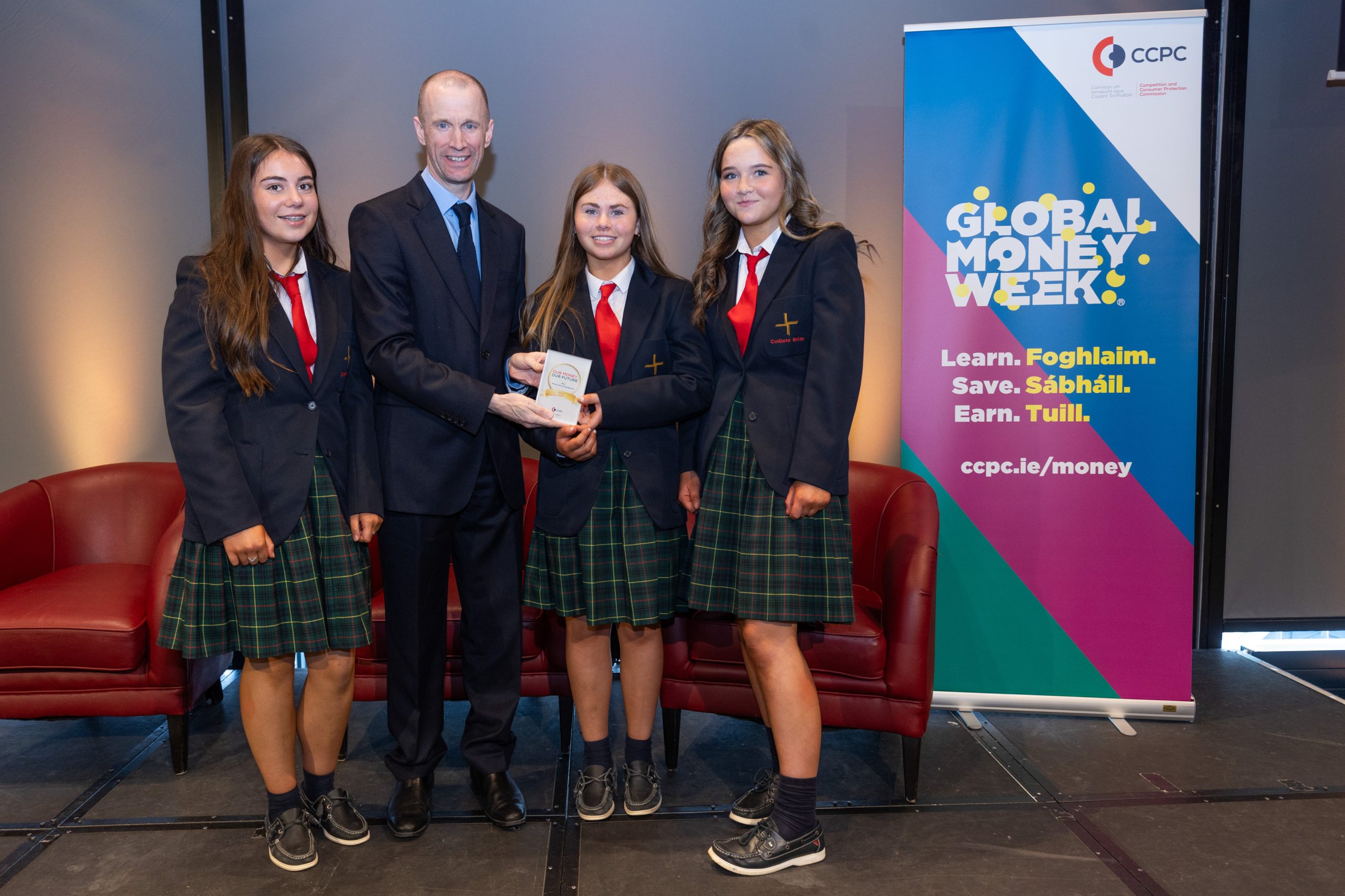
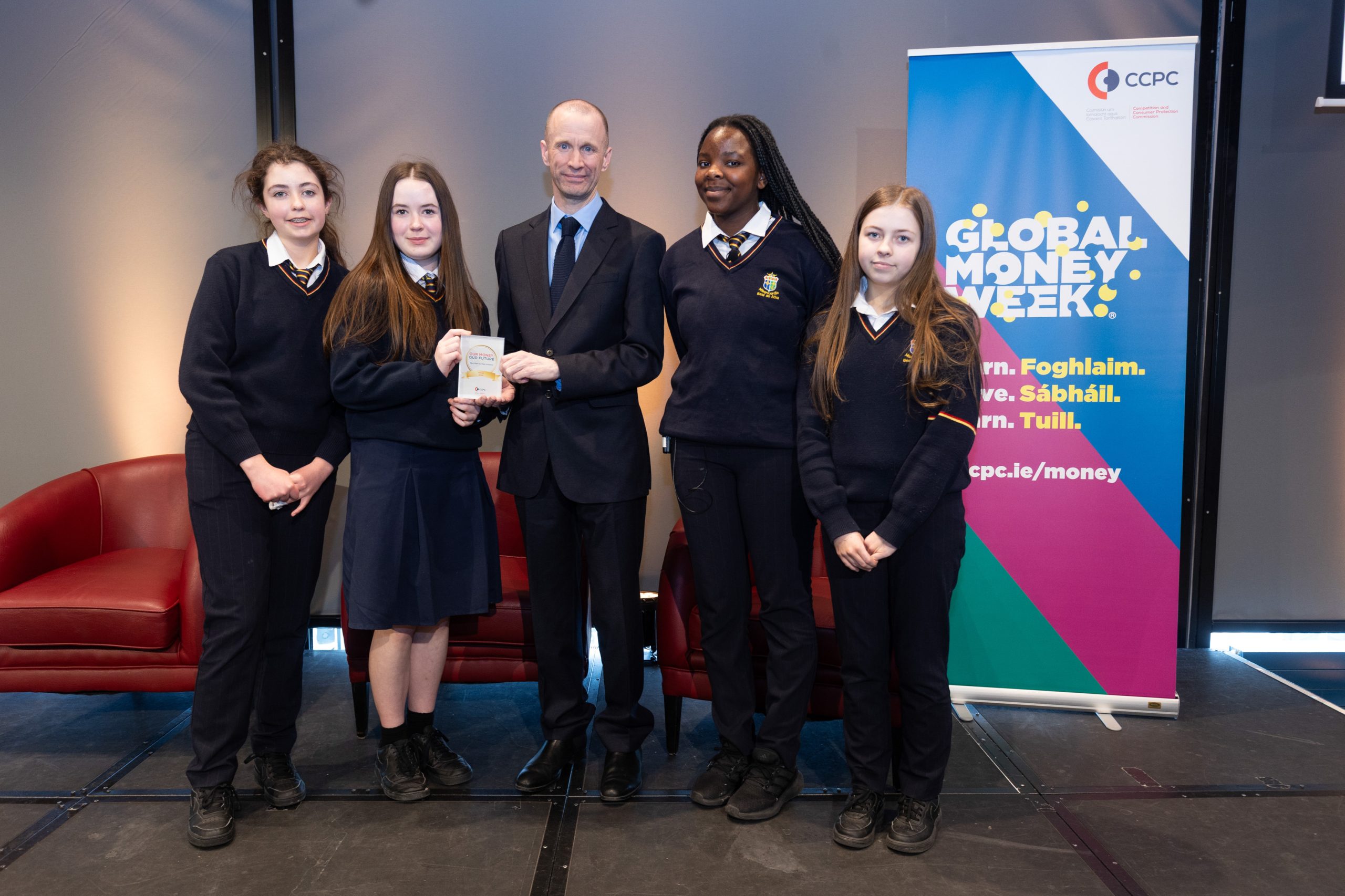
Each winning school received a €200 prepaid card and a prize plaque, which was presented to them by CCPC Chair, Brian McHugh, during the CCPC’s official Global Money Week launch event in Croke Park on 11 March 2026.
Awards
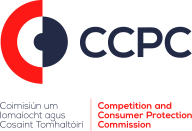
Most Innovative Financial Literacy Initiative – West Wicklow Youthreach
Through the project, Standing On Your Own Two Feet, learners explored what financial literacy means and worked together to build a hub that brings together clear, accessible information and practical tools.
Each group focused on different areas of finance they are likely to face in the near future. This hub will be a shareable resource for future learners and the local community, helping them gain confidence in managing money and making informed financial choices.
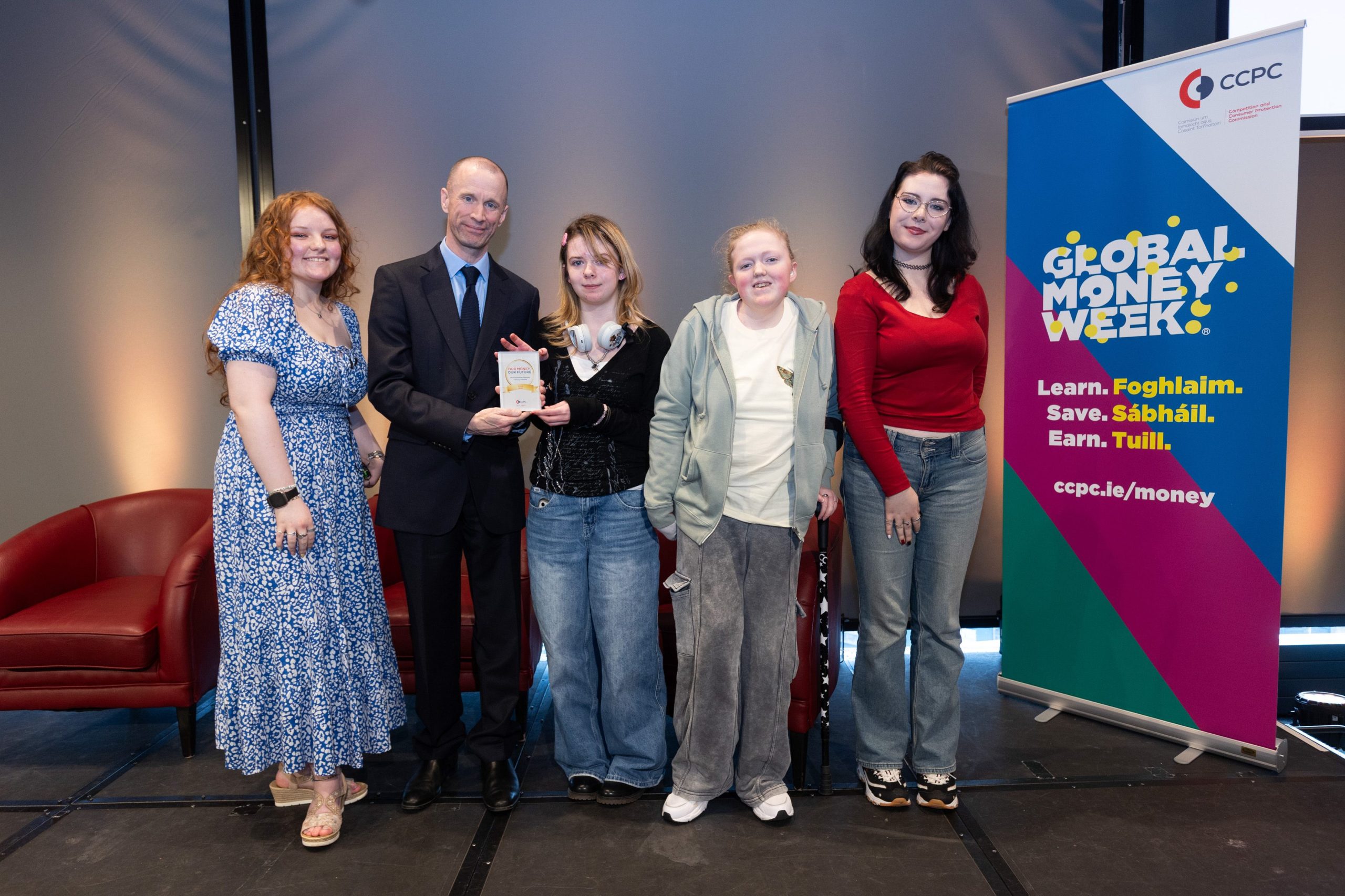
Best Money Skills Education Initiative – St. Laserian’s Special School, Carlow
Senior students learned how to manage money in real, practical ways by setting up and running their own mini companies. Each group designed a product to make and sell – from homemade cookies and hot chocolate stirrers to candles, brown bread and Christmas wreaths.
Throughout the project, students also met guest speakers from local financial institutions such as Carlow Credit Union and AIB, learning about savings, loans and opening a bank account.
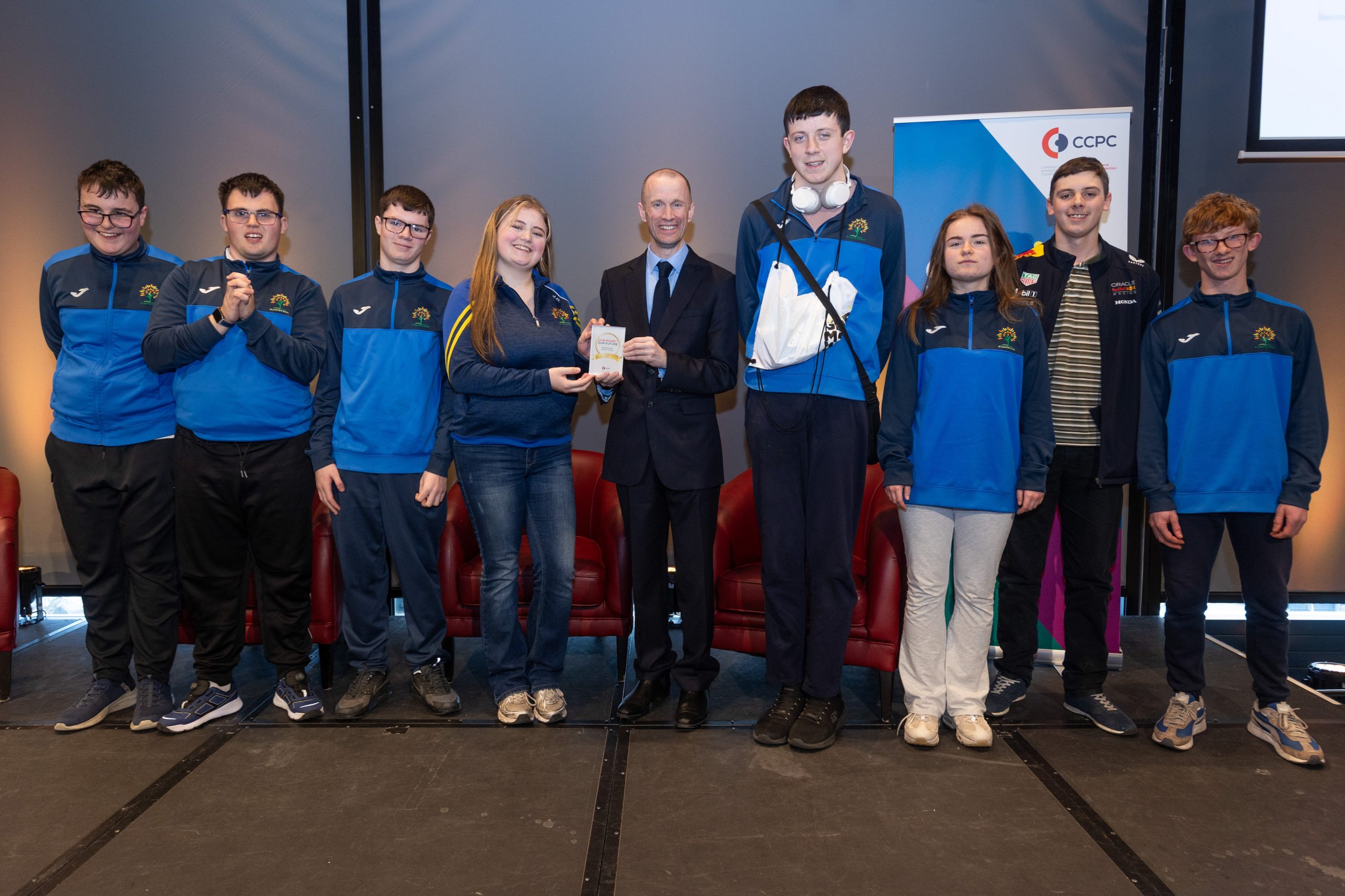
Best Sustainable Financial Literacy Project – Woodbrook College
‘Savvy Suppers Recipe Book’
Through the Savvy Suppers initiative, students gained skills in budgeting, meal planning and sustainable and cost-effective cooking, which are relevant to their everyday lives. The initiative fostered student leadership, collaboration and problem-solving as they took the lead in creating the recipe book.
Beyond the students, the school community has benefitted. Parents and families engaged in submitting recipes and taking part in cookery classes and recipe testing. The school community now has access to practical, low-cost meal ideas, reinforcing healthy and affordable eating habits at home. The participation in the initiative aligned with the school’s DEIS targets as it promoted social inclusion, engaging families and supporting lifelong learning.
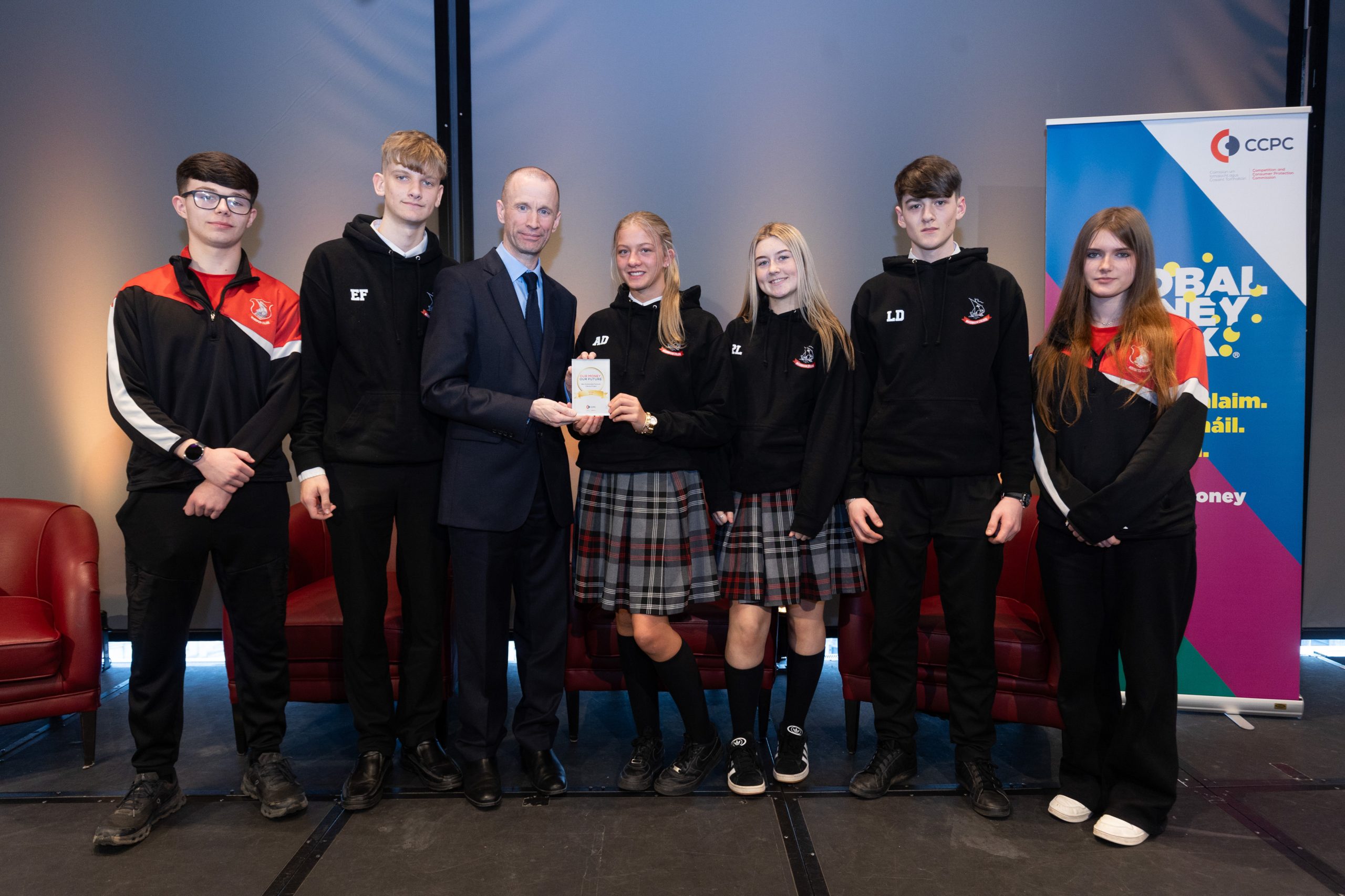
Best Whole-School and Community Engagement – Coláiste Bríde, Enniscorthy
‘Scam Stoppers’
Second-year students researched different types of scams and how to avoid them. They produced a Scam Stoppers booklet, which was shared across the community and their Garda station to help protect local residents as part of a wide outreach and awareness campaign.
The project focused on promoting financial literacy by teaching people how to recognise and protect themselves from scams. Their goal was not to scare people; it was to empower them.
Through the Scam Corner in school, the students are creating a long-term culture of awareness that will continue for years.
Best Peer-to-Peer Initiative – St Mary’s Secondary School Ballina
‘Protect Your Money Protect Your Future’
Students taught their peers about online scams, helped them recognise warning signs, how to protect their personal information, and avoid financial loss in an increasingly digital world. It built critical thinking skills so they can question suspicious offers, fake websites and misleading advertising. Students learned how to buy second-hand safely, encouraged smart spending habits and reduced pressure to purchase new, expensive items. It also promotes sustainability by supporting reuse and reducing waste. Overall, these skills empower young people to become responsible, confident and environmentally aware consumers.
Best Financial Literacy Resource – Boyne Community School
‘T€€N$ and $€N$€’
A team of students identified a significant gap in practical financial education amongst peers, which inspired them to develop a concise, student-led financial handbook. They printed this booklet and presented it to other students in the school to share what we had learned in peer‑to‑peer workshops. Their primary motivation was to demystify complex money matters, transforming them into accessible, relatable content for young people.
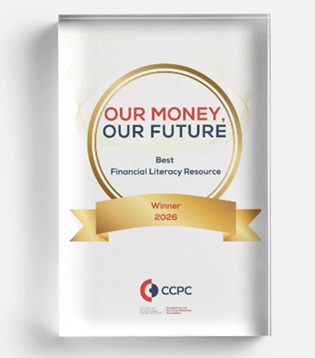
(The students were at another event at the time of the ceremony)
Best Applied Financial Learning Initiative – Hartstown Community School
‘Financial Futures’
Students learned financial skills by running small businesses, joining a school-wide financial literacy week and creating a vegetable garden to create produce in the Home Economics classroom.
Students researched the cost of making a Rain Harvesting and Compost System to gather rainwater and not use water from the taps to water plants and herbs.
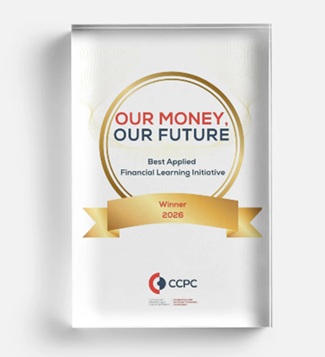
(The students were at another event at the time of the ceremony)
